
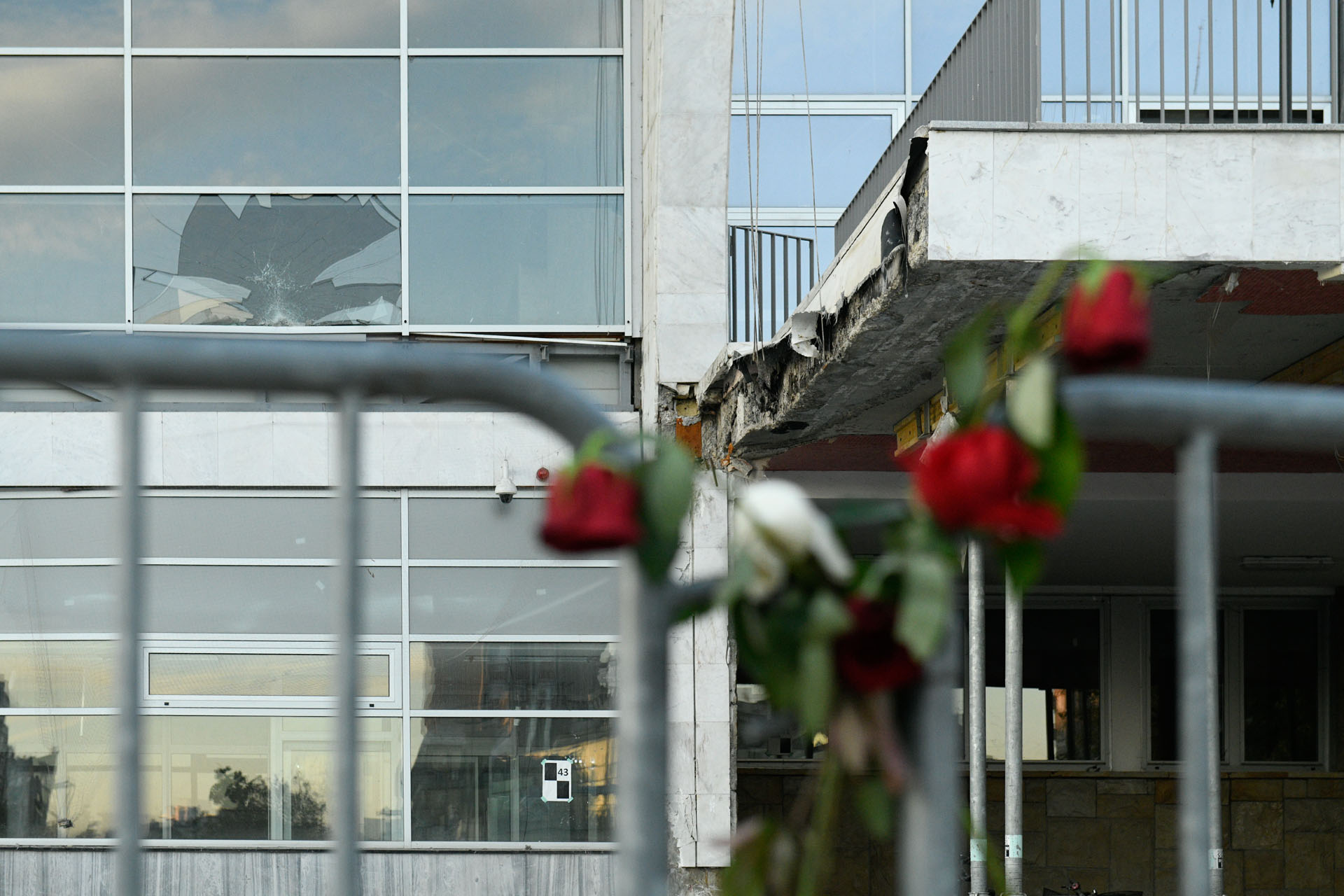
It has been one year since the canopy at Novi Sad’s central train station collapsed, killing sixteen people and shaking Serbia to its core. What started as a structural failure quickly became a symbol of something deeper: the failure of a system weakened by corruption and neglect. The tragedy set off waves of grief and anger that turned into protests across the country. On November 1st this year, tens of thousands of people returned to the streets of Novi Sad to mark the anniversary. They came not only to remember those who died, but also to show that the frustration which followed has not faded.
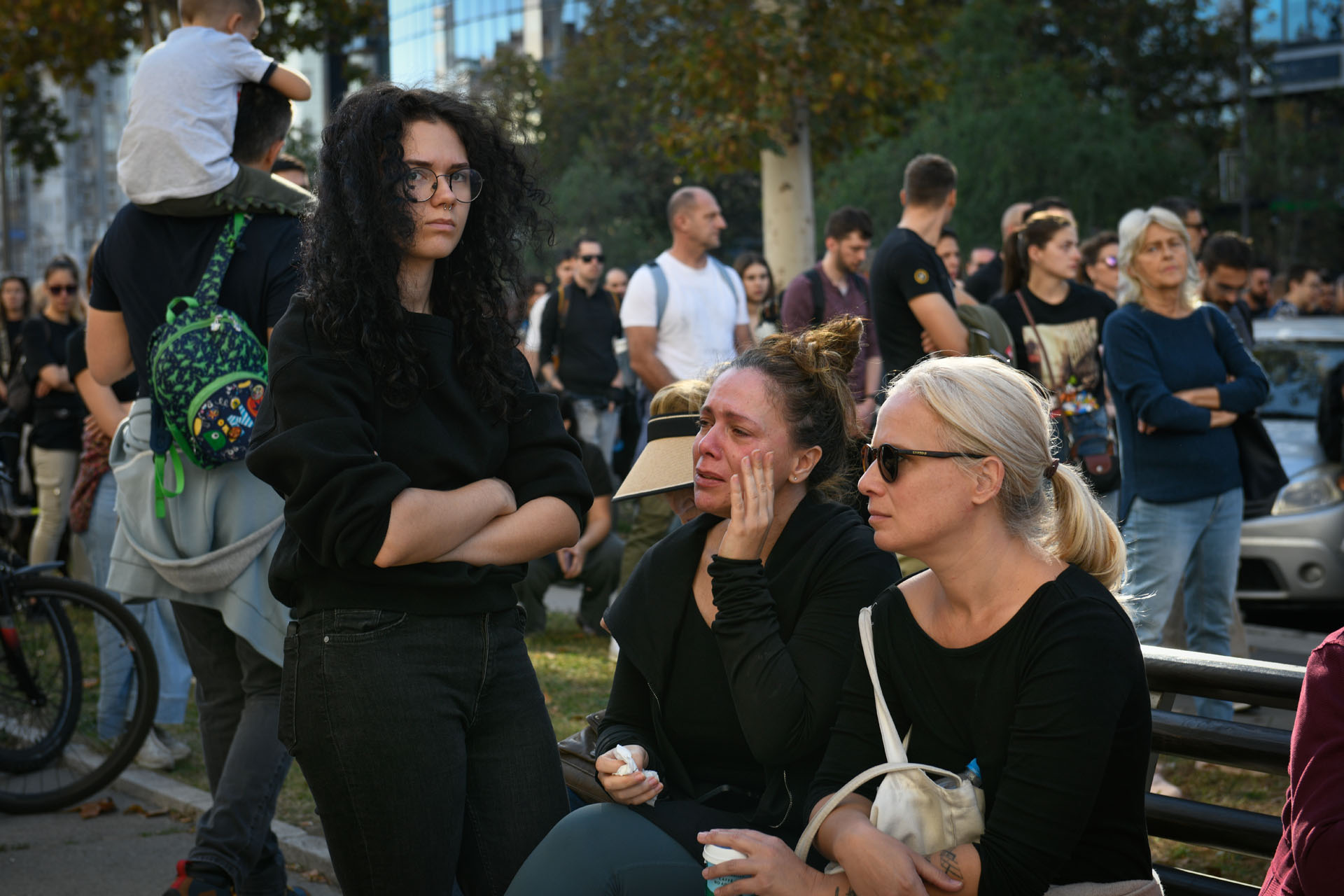
The day carried a quiet intensity. A sixteen-minute moment of silence was held, one minute for each life lost. Near the site of the accident, hundreds of thousands of people stood completely still. The usual noise of city life vanished. No car engines, no conversations, just silence. It felt heavy, like the city itself was holding its breath. When the time ended, people crossed themselves and many began to cry.
As a photographer, I found the experience humbling. There was something powerful about standing in that stillness with so many others. Later that afternoon I stopped by a small restaurant called Sarajevski Ćevapi to get something to eat. The air inside smelled of grilled meat and onions. Ćevapi is a simple and comforting Balkan dish—small sausages tucked into soft flatbread with raw onions on the side.
While I was eating, two men in military uniforms asked to sit at my table. They looked like veterans, each with a radio on his shoulder and insignia on his jacket. I wasn’t sure what to think. My first thought was that they were there to watch the protests or intimidate students. But as soon as we began to talk, I realized I had misjudged them because of bias.
They told me they were there to protect the students, not to police them. Both men were veterans who felt it was their duty to support young people demanding change. They seemed to say that the younger generation is tired—tired of waiting, tired of corruption, tired of feeling that there is no future for them in their own country and being forced to look for opportunity outside of their home.
They talked about how the canopy collapse was not just an accident but a symptom of something larger. The government had awarded the original repair contract to a Chinese company under suspicious terms. Corners were cut, safety was ignored, and soon after the reconstruction even parts of the ceiling inside the station began to give way. For them, the collapse was more than a tragic event; it was a clear example of how greed and corruption had taken hold of Serbia’s institutions.
The conversation stayed with me. What they described reminded me of similar stories I have heard in other countries—Ukraine, Georgia, even the United States. Everywhere I travel, I meet people who are frustrated with the same things: inequality, corruption, and leaders who seem more interested in staying in power than serving those who put them there.
On my drive back to Belgrade that night, I couldn’t stop thinking about it. I had the uneasy feeling that something larger is building across the world. The same anger, the same exhaustion, the same demand for dignity and fairness seem to be rising everywhere at once. Maybe these local crises are not isolated. Maybe they are pieces of a single global struggle between ordinary people and political systems that have stopped listening.
The collapse in Novi Sad might have taken sixteen lives, but it also revealed a deeper fault line running through society. The silence that filled the city on the anniversary was not only an act of mourning; it was also a kind of warning. When people grow quiet together, it means they are thinking, remembering, and waiting. And sometimes, silence is only the pause before a much louder sound begins.
.jpg?auto=format)